
 en
en
 English
 中文简体
中文简体 русский
 Français
 Español
 عربى
عربى
Content
- 1 How Solar Street Lights Work: The Short Answer
- 2 The Core Components Inside a Solar Street Light
- 3 Solar Panel Technology and Charging Efficiency
- 4 Battery Storage Options Compared
- 5 LED Fixtures and Smart Controllers
- 6 Motion Sensors and Adaptive Lighting Modes
- 7 Factors That Affect Real World Performance
- 8 Installation and Maintenance Considerations
- 9 Solar Street Light vs Traditional Grid Powered Light
- 10 Frequently Asked Questions
How Solar Street Lights Work: The Short Answer
A solar street light works by capturing sunlight through a solar panel during the day, converting that light into electricity, storing the electricity in a rechargeable battery, and then releasing that stored power at night to run an LED lamp head. The entire process is automatic. A built in light sensor detects falling light levels at dusk and switches the fixture on, while a controller manages how fast the battery charges and discharges so the light can run through the night without external wiring. In most modern systems this cycle repeats every single day without any manual input, which is the main reason solar street lighting has become common along roads, parking areas, parks, and rural paths where running electrical cable would be expensive.
The rest of this guide breaks down each part of that cycle in detail, compares battery and panel choices, and answers the most common questions people ask before buying or installing a solar street light system.
The Core Components Inside a Solar Street Light
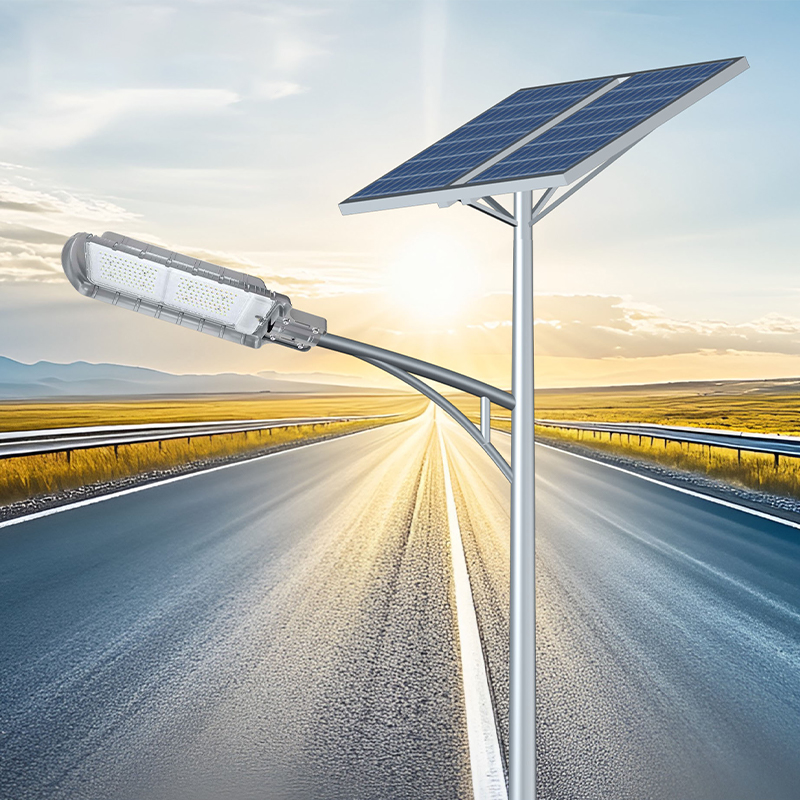
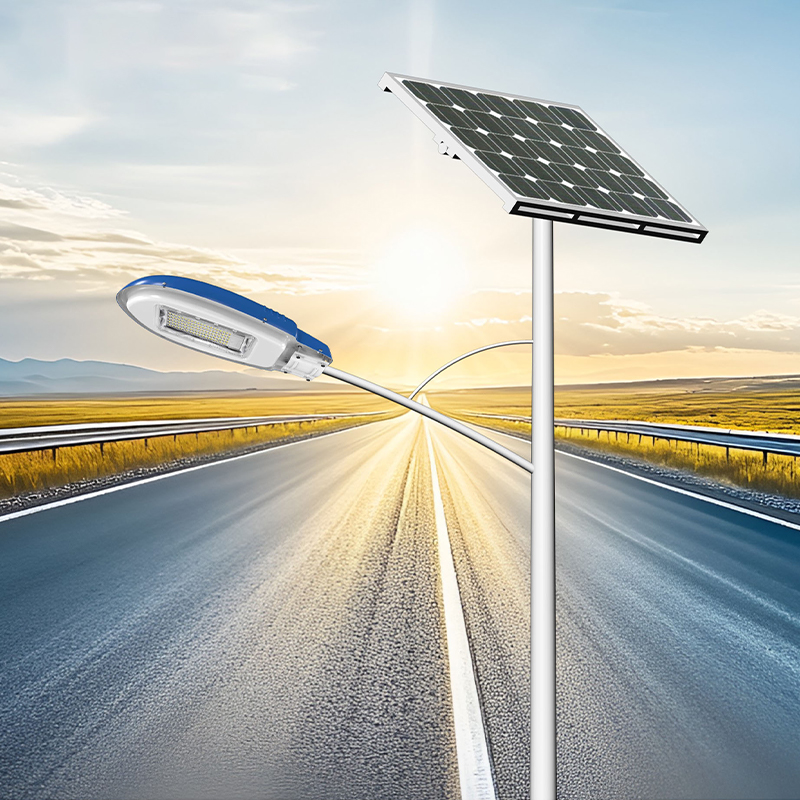
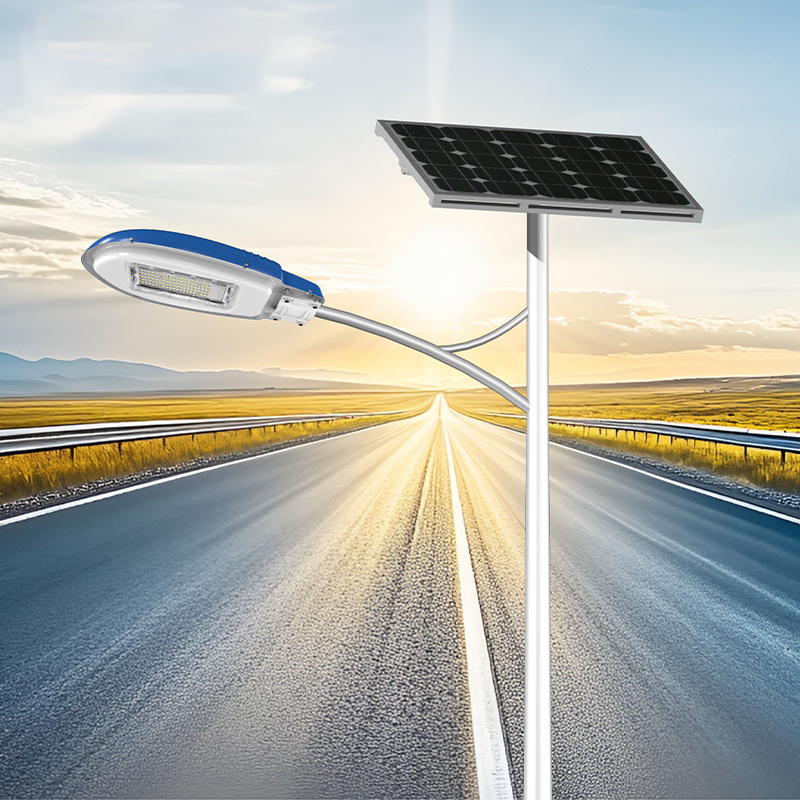
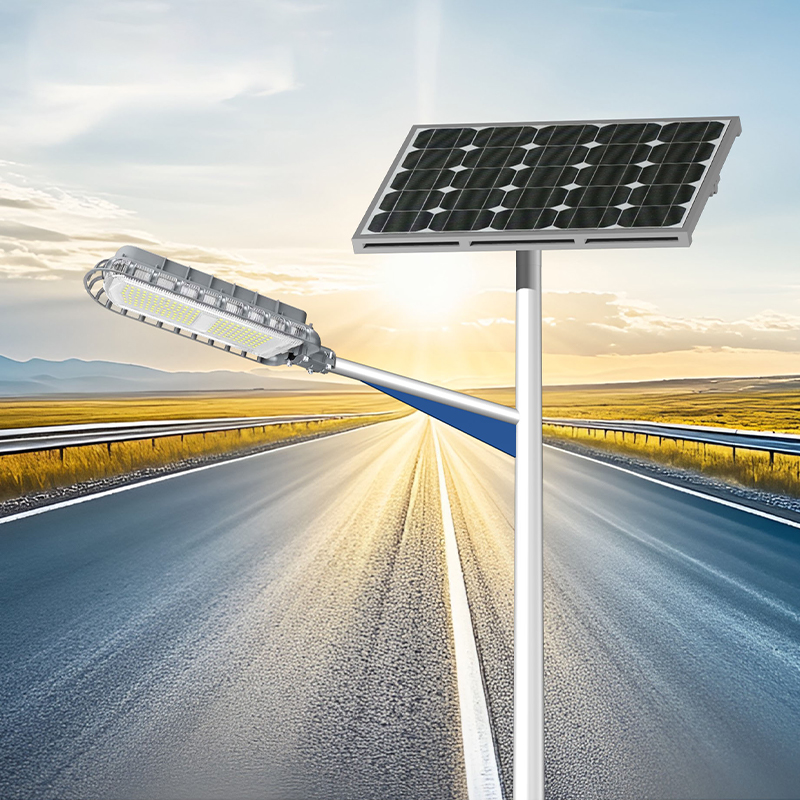
Every solar street light is built from five main parts working together. Understanding each part makes it much easier to compare products or diagnose a light that is not performing well.
- Solar panel - usually monocrystalline or polycrystalline silicon, mounted at an angle to catch maximum sunlight
- Battery - stores the converted energy, commonly lithium iron phosphate in newer units
- Charge controller - regulates charging and discharging to protect the battery from overcharge or deep drain
- LED lamp head - converts stored electricity into visible light with very low power draw
- Pole and mounting bracket - positions the panel and light head at the correct height and angle
Some systems separate the panel and the light head onto two arms of the same pole, called split type designs, while others integrate everything into a single compact unit called all in one solar street lights. Both designs rely on the same basic charging and discharging cycle described above.
A Typical 24 Hour Operating Cycle
- Morning: sunlight hits the panel and the controller begins routing current to the battery
- Midday: peak sunlight produces the highest charging rate, often reaching full battery capacity within four to six hours on a clear day
- Late afternoon: as light levels drop, the built in sensor prepares to trigger the switch to lighting mode
- Dusk: the light sensor detects darkness and the controller switches the LED on automatically
- Night: the battery discharges gradually to power the LED, sometimes at a lower brightness level during low traffic hours to extend runtime
- Dawn: rising ambient light triggers the sensor again and the LED turns off, allowing the panel to begin recharging
This loop repeats daily, and a well matched system is designed so that even after several cloudy days in a row, the battery still holds enough reserve charge to keep the light running through the night.
Solar Panel Technology and Charging Efficiency
The panel is the starting point of the whole system, so its efficiency has a direct effect on how reliable the light will be. Monocrystalline panels typically convert around 20 to 22 percent of sunlight into usable electricity, while polycrystalline panels usually fall in the 15 to 17 percent range according to manufacturer specification sheets commonly published by solar equipment producers. Monocrystalline panels are more expensive per watt but perform noticeably better in low light or partly cloudy conditions, which is why they are the more common choice for commercial grade solar street lights.
Panel angle also matters. Installers generally set the tilt close to the local latitude of the installation site, which helps the panel capture more direct sunlight across the different seasons rather than just at one time of year. A panel mounted flat or angled incorrectly can lose a meaningful share of its potential charging capacity, even on a sunny day.
Battery Storage Options Compared
The battery is often the component that determines how long a solar street light will last before it needs major service. Lithium iron phosphate, usually shortened to LiFePO4, has become the standard choice for new installations because it tolerates heat well, handles thousands of charge cycles, and rarely suffers the sudden capacity loss that older battery chemistries experience.
| Battery Type | Typical Cycle Life | Heat Tolerance | Common Use |
|---|---|---|---|
| LiFePO4 | 2000 plus cycles | High | Modern commercial and residential units |
| Lithium ion NMC | 800 to 1200 cycles | Medium | Some mid range fixtures |
| Gel lead acid | 300 to 500 cycles | Low to medium | Older or budget installations |
Because LiFePO4 batteries handle far more charge cycles, they generally need replacement much less often than lead acid alternatives, which lowers long term maintenance costs even though the upfront price is somewhat higher.
LED Fixtures and Smart Controllers
The lamp head itself uses LED chips rather than traditional sodium or halogen bulbs because LEDs use a fraction of the power to produce comparable brightness. This lower power draw is one of the main reasons solar street lights can run all night on a battery that charges from a single day of sunlight. Many controllers today also include dimming schedules, so the light might run at full brightness during peak evening hours and automatically dim to a lower setting late at night when foot or vehicle traffic drops, stretching the available battery charge further.
Common Controller Features
- Automatic dusk to dawn switching based on ambient light
- Overcharge and deep discharge protection for the battery
- Programmable dimming schedules for different times of night
- Temperature compensation to protect performance in extreme heat or cold
Motion Sensors and Adaptive Lighting Modes
Many solar street lights now include a passive infrared motion sensor built into the lamp head. Instead of running at full brightness all night, the fixture stays at a lower standby brightness, then jumps to full output when it detects movement from a pedestrian, cyclist, or vehicle within its detection range, before gradually dimming back down after a set delay. This adaptive approach is one of the more practical ways to extend runtime on shorter winter days, because the light is only drawing peak power when it is actually needed rather than continuously through the night.
Factors That Affect Real World Performance
Several environmental and installation factors influence how consistently a solar street light performs across the year.
- Geographic latitude and average daily sunlight hours
- Seasonal changes, since winter days have less daylight for charging
- Shading from nearby trees or buildings that partially block the panel
- Dust, snow, or debris accumulation on the panel surface
- Battery age, since capacity naturally decreases over years of use
Manufacturers usually publish an autonomy rating, meaning how many consecutive cloudy or rainy days the battery can sustain the light without a full recharge. A common target for quality residential and commercial units is three to five days of autonomy, which gives a reasonable buffer against stretches of poor weather.
Installation and Maintenance Considerations
Because solar street lights do not need trenching for electrical cable, installation is generally faster than wiring a traditional grid connected light. The pole is set in a concrete footing, the panel is angled toward the sun, and the system is tested through one charge and discharge cycle before final setup is confirmed. Ongoing maintenance is fairly light, typically limited to wiping dust or debris off the panel a few times a year and checking that the mounting bolts remain secure after seasonal weather changes.
Simple Maintenance Checklist
- Wipe the panel surface clean every few months
- Check that the panel angle has not shifted after storms
- Inspect cable connections for corrosion in humid climates
- Monitor brightness levels for early signs of battery aging
Solar Street Light vs Traditional Grid Powered Light
| Category | Solar Street Light | Grid Powered Light |
|---|---|---|
| Installation | No trenching or cable needed | Requires underground cable and connection point |
| Running Cost | No electricity bill after installation | Ongoing electricity cost |
| Power Outage Impact | Unaffected, runs on stored battery power | Goes dark during a grid outage |
| Best Fit | Remote roads, parks, rural paths | Dense urban areas with existing grid access |
Frequently Asked Questions
How long does a solar street light stay on at night
Most quality systems are designed to run all night on a single full charge, typically eight to twelve hours depending on the season, with several extra days of stored backup capacity built in for cloudy weather.
Do solar street lights work in winter
Yes, though shorter daylight hours mean the panel has less time to recharge, so many buyers choose larger panels or batteries with higher autonomy ratings for regions with long winters.
How long do the batteries last before replacement
A LiFePO4 battery used in a solar street light commonly lasts eight to ten years under normal conditions before capacity drops enough to warrant replacement.
Can a solar street light fully replace a grid connected light
In most outdoor settings, yes, as long as the panel and battery are sized correctly for the local sunlight levels and the desired nightly runtime.
Why did my solar street light stop turning on
The most common causes are a dirty or shaded panel blocking charging, an aging battery that can no longer hold sufficient charge, or a faulty light sensor that fails to detect darkness correctly.