
 en
en
 English
 中文简体
中文简体 русский
 Français
 Español
 عربى
عربى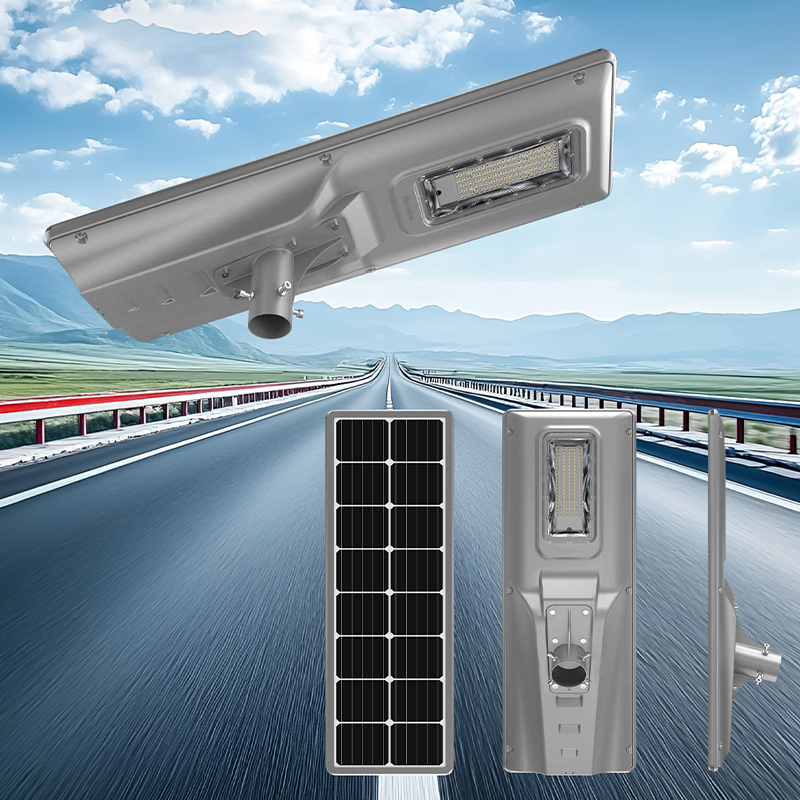








How Long Will a Solar Street Light Last? The Direct Answer A well-built solar street light typically delivers 8 to 10 years of reliable overall service, though individual components age at very different rates. The LED fixture itself is usually rated for 50,000 to 100,000 hours of operation, which ...
READ MORE
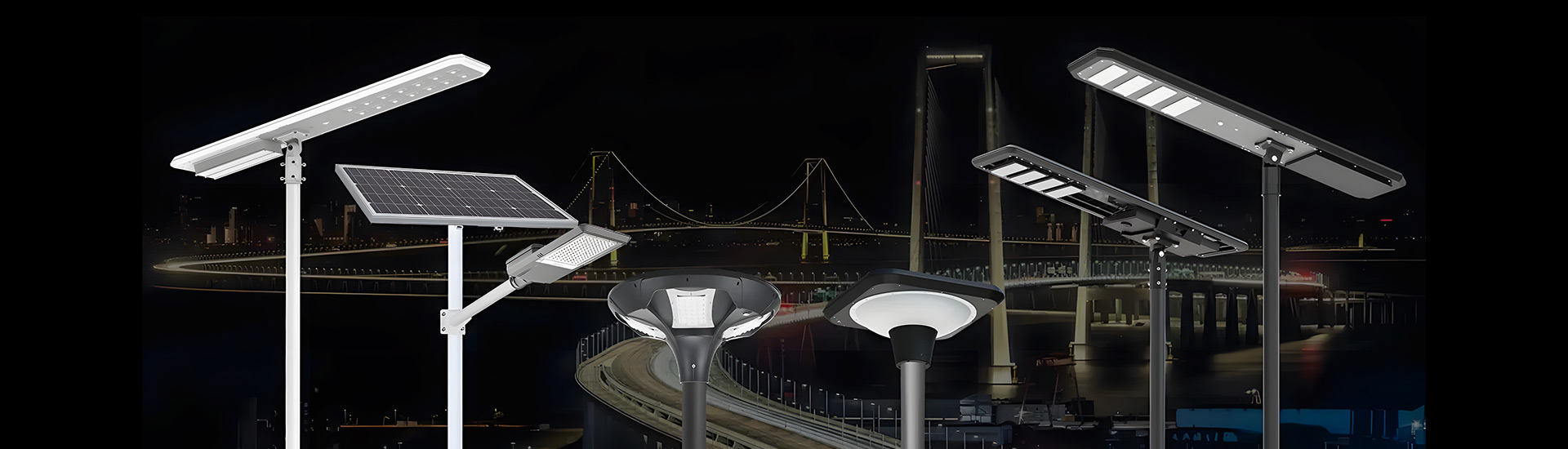
Commercial All In One Solar Street Light Manufacturer
What is an All-in-One Solar Street Light?
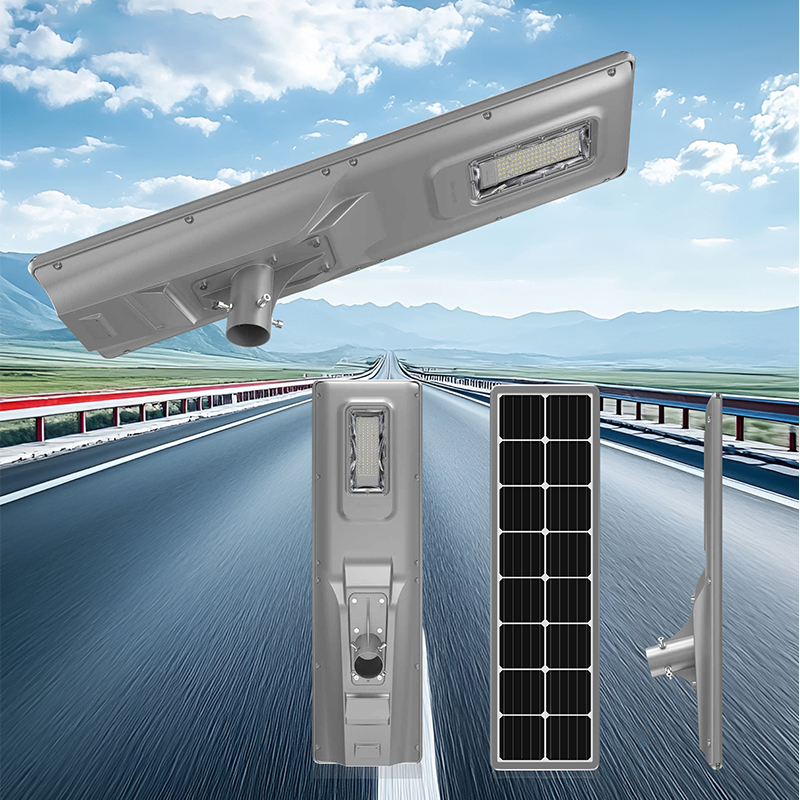
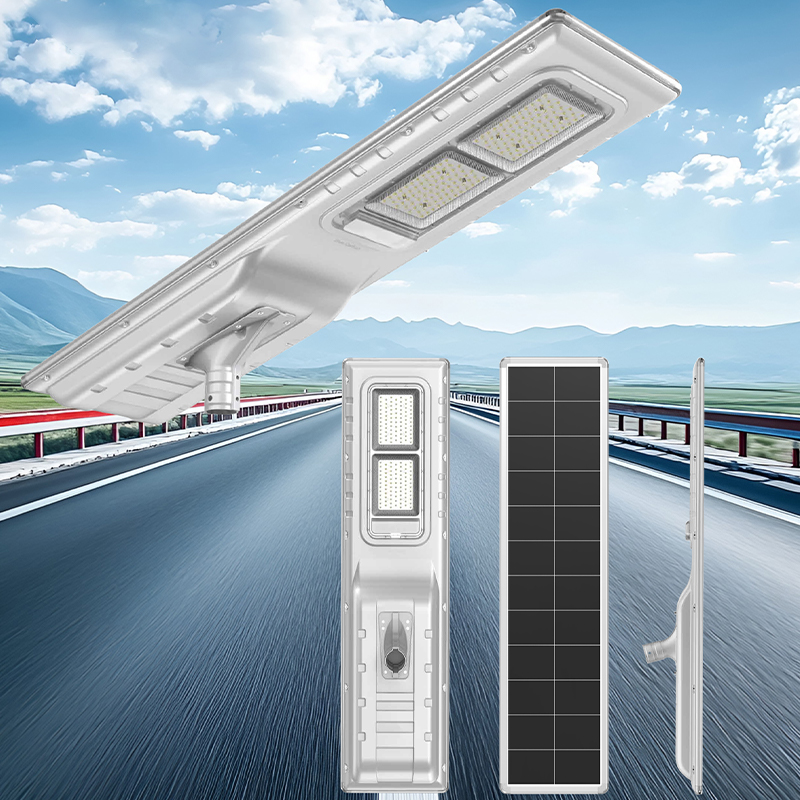
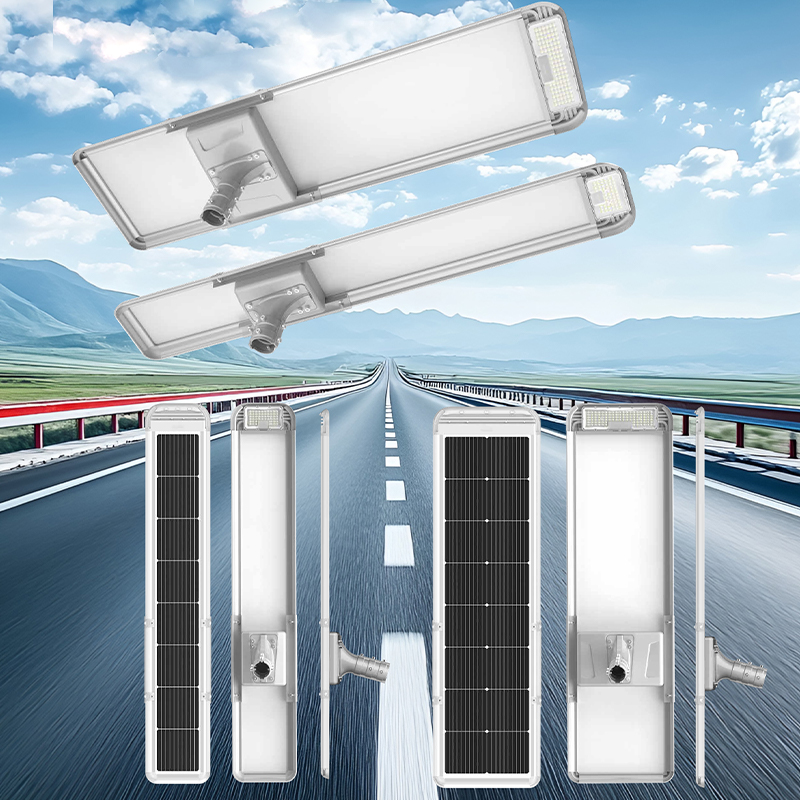
All-in-One Solar Street Light refers to a standalone lighting device that integrates solar PV panels, lithium batteries, LED light sources, and controllers within a single luminaire housing. Compared to split-type solar street lights, the all-in-one structure requires no external cables or control boxes, is easier to install, has fewer failure points, and is currently the most widely used product form in the solar street light industry.
RISUN Group's All-in-One Solar Street Light series covers 20W to 120W full power range, suitable for various lighting needs from rural township roads to urban secondary roads. All models use LiFePO₄ batteries to meet continuous power supply requirements during cloudy and rainy days.
Core Technology Features
▪Integrated PV panel and lamp body: the solar panel is built into the top or back of the lamp body, eliminating the need for a separate mounting bracket and reducing installation steps
▪LiFePO₄ Battery (LiFePO₄): Compared to lead-acid batteries, it offers longer cycle life, higher safety, more stable low-temperature performance, and is maintenance-free
▪Smart Light Control+Dual light/time control mode: automatically turns on at sunset, supports brightness level settings by time period to extend battery service life
▪IP66 Protection rating: full range dust and jet water resistant, suitable for all outdoor rain and dust environments
▪Die-cast aluminum housing: good thermal conductivity, corrosion-resistant, long lamp body service life, surface treated with anodizing or powder coating
▪Built-in quadruple battery protection: overcharge, over-discharge, short circuit, and reverse polarity protection for guaranteed safety
Application Scenarios
Scenario Type Recommended Power Range
Village Access Roads / Rural Roads 20W – 36W
Township Streets / Community Internal Roads 30W – 60W
County Secondary Roads / Industrial Parks 60W – 80W
Urban Secondary Roads / Municipal Roads 80W – 120W
Why Choose RISUN Group All-in-One Solar Street Lights?
✦ Grid-Free, Truly Zero Electricity Cost Operation
All products are independent of the municipal grid, with no electricity costs after installation. Taking 100 units of 60W street lights as an example, compared to grid-powered lights with equivalent illuminance, tens of thousands in electricity costs can be saved annually, with 5 -year comprehensive operating cost advantages being significant.
✦ Easy Installation, Short Construction Period
No need to dig cable trenches or lay power lines. A single person can complete lamp assembly and pole mounting. For remote rural areas, hilly terrain, and regions with high wiring costs, all-in-one solar street lights are a direct means to reduce construction costs.
✦ LiFePO4 Battery for More Stable Battery Life
The full range uses LiFePO₄ batteries, supporting continuous 5–7 days of normal operation during cloudy/rainy weather (per day 12 hours, in energy-saving mode). Compared to lead-acid batteries, low-temperature performance is better and cycle life is 3–5 times longer, reducing battery replacement frequency.
✦ Full Power Coverage, One-Stop Selection Solution
From 20W to 120W, RISUN Group offers 10 + power specifications to meet all scenarios from village paths to municipal roads. If multiple power ratings are needed in the same project batch, they can be uniformly procured from RISUN Group, reducing supplier management costs.
✦ Pre-Sales Selection Support, Reducing Selection Risk
RISUN Group's technical team can provide selection recommendations based on the project's geographic location (latitude, annual average sunshine hours) and road grade (width, illuminance requirements), and issue illuminance simulation reports to ensure the selection matches actual needs and reduce future complaints and rework.
FAQ
Q1: What is the difference between all-in-one and split-type solar street lights, and which is better for my project?
A: The all-in-one integrates the PV panel, battery, and lamp head into one unit, making installation simple and maintenance convenient, suitable for standardized road projects with batch rapid construction. Split-type PV panels can be adjusted independently for orientation angle, suitable for special installation environments (such as when sunlight is obstructed). If the installation environment is relatively standard, the all-in-one solution is the preferred recommendation.
Q2: How to determine if local sunshine meets usage requirements?
A: Installation is recommended in areas with annual average sunshine hours ≥2200 hours; the vast majority of provinces nationwide can meet this requirement. High-latitude regions (parts of Northeast and Northwest China) or cloudy/rainy regions (Southwest mountain areas) need to appropriately increase battery capacity or select higher-power PV panel models. RISUN Group can provide local sunshine data reference based on project coordinates.
Q3: How often does maintenance need to be performed after street light installation?
A: Under normal use conditions, LiFePO₄ batteries are recommended to be checked for capacity degradation every 3–4 years; PV panels are recommended to be cleaned 1–2 times per year (depending on local dust levels); LED LED light sources do not need replacement within their lifespan. Overall maintenance frequency is far lower than traditional grid-powered street lights.
Q4: Does the product have a warranty? What does it cover?
A: We provide a 3-5 -year quality guarantee. With our own SMT production line, we maintain a comprehensive spare parts inventory. In case of technical issues, our engineering team will provide remote technical guidance within 24 hours.
Q5: How are large quantity purchases quoted, and is customization available?
A: Please contact RISUN Group's business team with the project name, model, quantity, and delivery time, and a quotation will be provided within 1 business day. Customization of lamp body color, color temperature, mounting brackets, and other requirements is supported; details can be confirmed with the business team.
Q6: Do you support prototype testing?
A: We warmly welcome customers to evaluate prototypes. You can contact our sales team to order test samples. We believe that through physical comparison, you will find RISUN Group's significant advantages in material thickness and welding craftsmanship.
About Us
Jiangsu RISUN Traffic Technology Co., Ltd.
RISUN Group is a professional
Commercial All In One Solar Street Light Manufacturer with deep industry experience, specializing in outdoor lighting. We offer a full range of lighting solutions, including solar streetlights, mains-powered LED streetlights, and high-mast lighting systems, for municipal and infrastructure applications. Our company boasts a large number of professional engineers specializing in the design, installation, and maintenance of outdoor lighting, traffic signals, and electronic police systems, providing comprehensive pre-sales, sales, and after-sales services. We also possess advanced hot-melt and rumble strip marking equipment and experienced traffic marking installation personnel, focusing on providing comprehensive traffic marking installation services.
Certificate Of Honor
Blog
-
-
The Direct Answer: Street Light Poles Fall Into a Few Core Categories A street light pole is generally classified by three things, the material it is made from, the height it is manufactured at, and the way the fixture mounts onto it. Most municipal and commercial projects choose between steel, alu...
READ MORE -
The Direct Answer: LED Street Lights Cut Costs and Improve Visibility Cities switched to LED street lights mainly because LED fixtures use far less electricity than older sodium or mercury vapor lamps, last many times longer, and produce whiter, clearer light that helps drivers and pedestrians see ...
READ MORE
Message Feedback
All In One Solar Street Light Industry knowledge
How an All-in-One Solar Street Light Works
An all in one solar street light integrates the solar panel, battery, LED module, and smart controller into a single housing mounted directly on top of the pole. This design eliminates the separate battery box and interconnecting cables required by traditional split systems, reducing both installation time and the risk of cable theft or weather-related wire damage.
During the day, the built-in panel charges an internal lithium iron phosphate battery through a smart charge controller. At dusk, a light sensor automatically activates the LED module, while motion sensors on many models dim the light to 30-50% brightness during periods of no activity to extend battery reserves. This design typically supports 10-12 hours of nightly operation with 3-5 days of backup power during overcast weather.
Why Integration Matters
Because every component sits within one sealed enclosure, all-in-one fixtures generally achieve higher waterproof ratings than exposed split wiring systems, and a single pole installation can often be completed by two workers in under an hour, compared to a full day for trenched, grid-connected alternatives.
What an All-in-One Solar Street Light Factory Should Offer
A capable all in one solar street light Factory controls production across steel fabrication, electronics assembly, and final testing rather than relying on scattered subcontractors. Jiangsu RISUN Traffic Technology Co., Ltd. operates a 100-acre production base with automatic plate leveling, steel bending, welding, CNC machining, and spraying equipment, alongside imported chip mounters and circuit board testing lines used for controller manufacturing.
This is the same operational model behind a well-run integrated solar street light factory, where housing, panel bracket, and electronic components are engineered together from the start rather than adapted after the fact, resulting in tighter seals and more consistent thermal performance across the sealed unit.
Sourcing Through All-in-One Solar Street Light Wholesale
Buyers pursuing all in one solar street light Wholesale pricing generally see per-unit costs decrease as order volume moves from sample batches toward full container loads, since fixed production and shipping costs are spread across more units. Before committing to volume, buyers should confirm battery chemistry, panel wattage, and warranty terms, since these factors affect performance far more than unit price alone.
- Request sample units for on-site brightness and runtime testing before bulk ordering
- Confirm lead times against project deadlines, especially for container-load quantities
- Verify after-sales support coverage for battery or driver replacement
Single Arm Curved Solar Street Light Design
The Single Arm Curved Solar Street Light is one of the most widely used pole configurations for roads and pathways, positioning the fixture at a fixed outward angle to project light evenly across the road surface rather than straight down. The curved arm also improves aesthetics for residential streets and park pathways where a clean visual profile is valued alongside functional lighting.
This configuration works well for single-lane roads and pathways up to roughly 8-10 meters wide, and it is generally simpler to install than dual-arm or high-mast alternatives, since it requires only one foundation point and one fixture head per pole.
High Power Solar Street Light Options: 80W and 120W Suppliers
For wider roads and areas with higher brightness requirements, a High Power Solar Street Light paired with a larger panel and battery bank can maintain strong illumination without shortening runtime. Reputable 80w/120w Solar Street Light Suppliers typically size the panel and battery proportionally to wattage, ensuring the fixture still delivers a full night of operation even during winter months with shorter daylight hours.
| Fixture Wattage | Recommended Road Width | Pole Height |
|---|---|---|
| 60W | Up to 8 meters | 5-6 meters |
| 80W | 8-12 meters | 6-8 meters |
| 120W | 12-18 meters | 8-10 meters |
When to Consider IP66 Split Solar Street Light Suppliers
While all-in-one fixtures suit most standard projects, very high-wattage installations above 150W often benefit from a split-type design, where the panel is mounted separately from the light head and battery box. Working with experienced IP66 Split solar street light Suppliers allows the panel to be independently angled for maximum sun exposure while the battery is housed in a ground-level or pole-mounted enclosure rated to IP66, protecting it against dust ingress and powerful water jets.
Split systems also simplify battery servicing on large installations, since maintenance crews can access the battery box at ground level without working at height, an advantage that becomes significant across highway-scale projects with hundreds of poles.
Frequently Asked Questions
Q1: Is an all-in-one solar street light suitable for high-traffic highways?
All-in-one fixtures work well for roads up to moderate wattage requirements; for highways needing higher power output, split-type or high power solar street light configurations are typically more practical.
Q2: What is the difference between 80W and 120W solar street lights?
An 80W fixture generally suits roads up to 12 meters wide, while a 120W fixture is designed for wider roads up to 18 meters, requiring a proportionally larger panel and battery to maintain the same runtime.
Q3: Why choose a curved single arm pole instead of a straight pole?
The curved arm angles the fixture outward to distribute light more evenly across the road surface and is commonly preferred for its clean visual profile on residential and pathway installations.
Q4: What does an IP66 rating mean for split solar street light batteries?
IP66 indicates the enclosure is fully dust-tight and protected against powerful water jets from any direction, making it suitable for outdoor battery housings exposed to heavy rain or coastal spray.

Let’s starting a project with
RISUN GROUP
We’d love to hear from you.
RISUN Group is a large-scale specialized transportation safety facility and outdoor lighting production
enterprise that integrates design, production, construction, and technical services.
Quick Links
Product List
Contact Info.
-

+86-180 2173 1222
+86-(0)514-8421 9989
-

-

Fuling Road, Lingtang Hui Township, Gaoyou City, Jiangsu Province, China
QR Code
Copyright © Jiangsu RISUN Traffic Technology Co., Ltd. Commercial All In One Solar Street Light Manufacturer All In One Solar Street Light Supplier All Rights Reserved.

